Timeless Hands: Ettore Marinelli
and the Art of Sculpting Memory
In the mountain town of Agnone, Italy—known for its centuries-old Marinelli bell foundry—Ettore Marinelli is forging something equally resonant yet distinct: sculptural echoes of history, humanity, and time itself. A descendant of the world’s oldest bell-making dynasty, Ettore has carved out his own artistic path, not in bronze reliefs that ring, but in forms that speak—quietly, powerfully—to the soul.
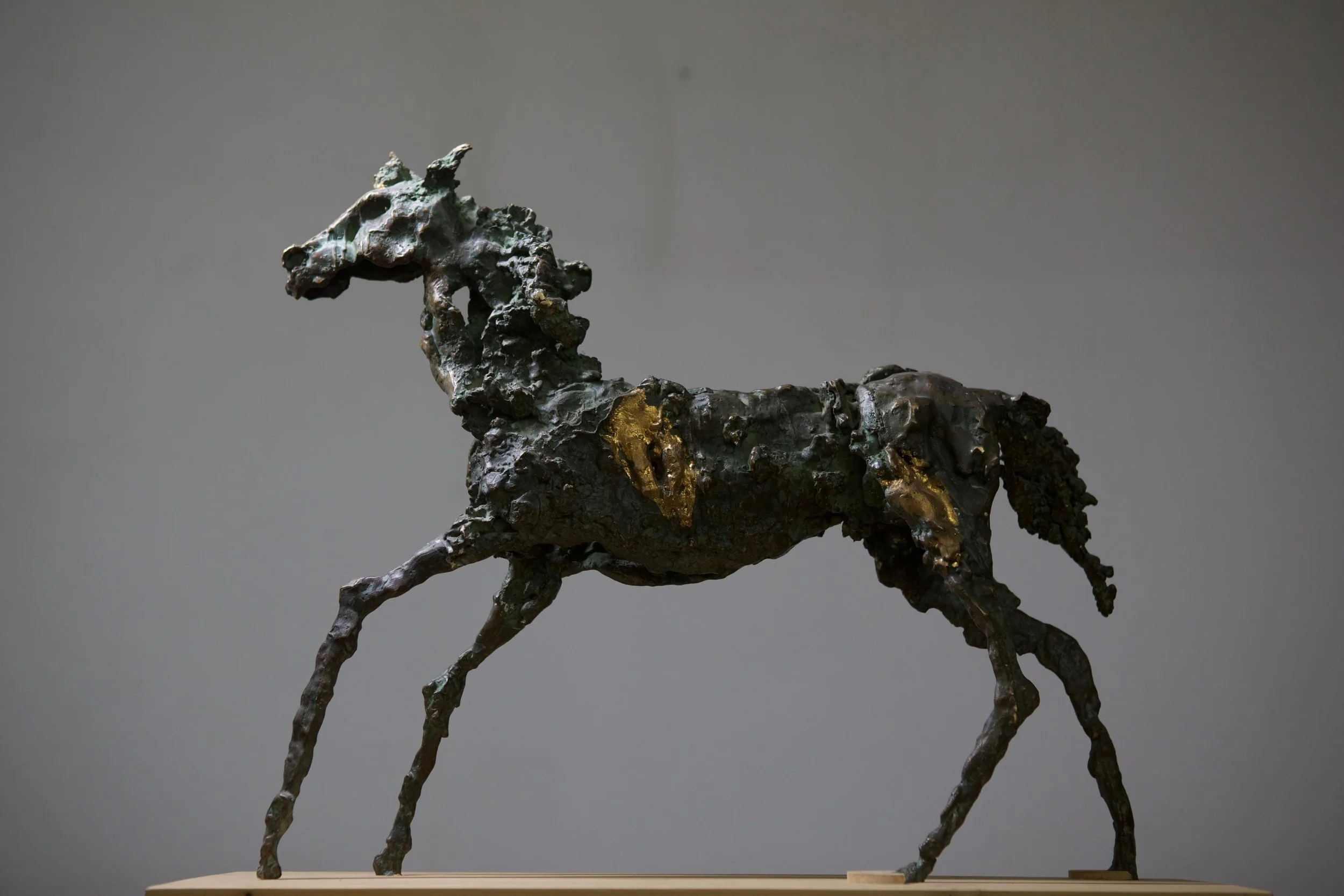
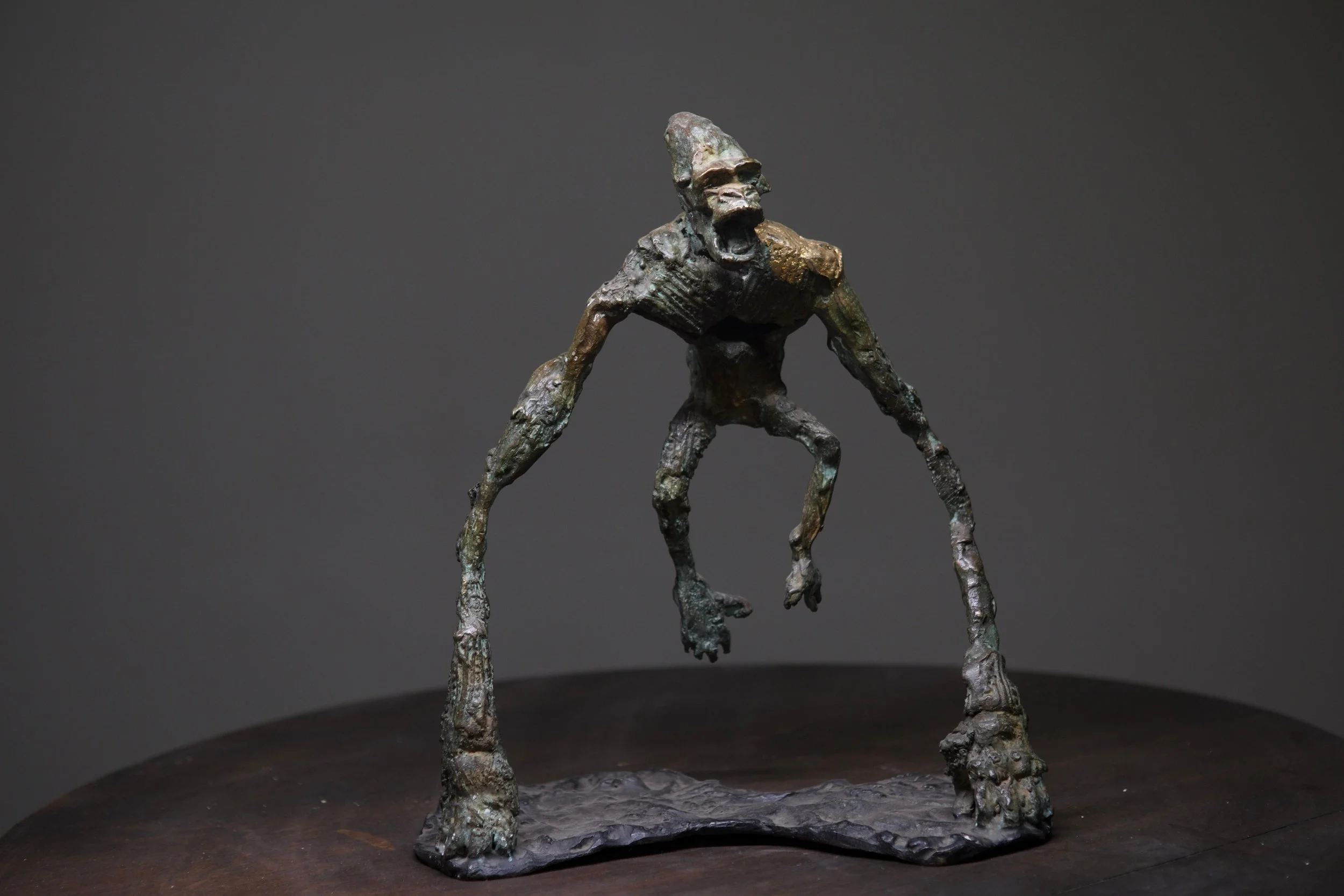
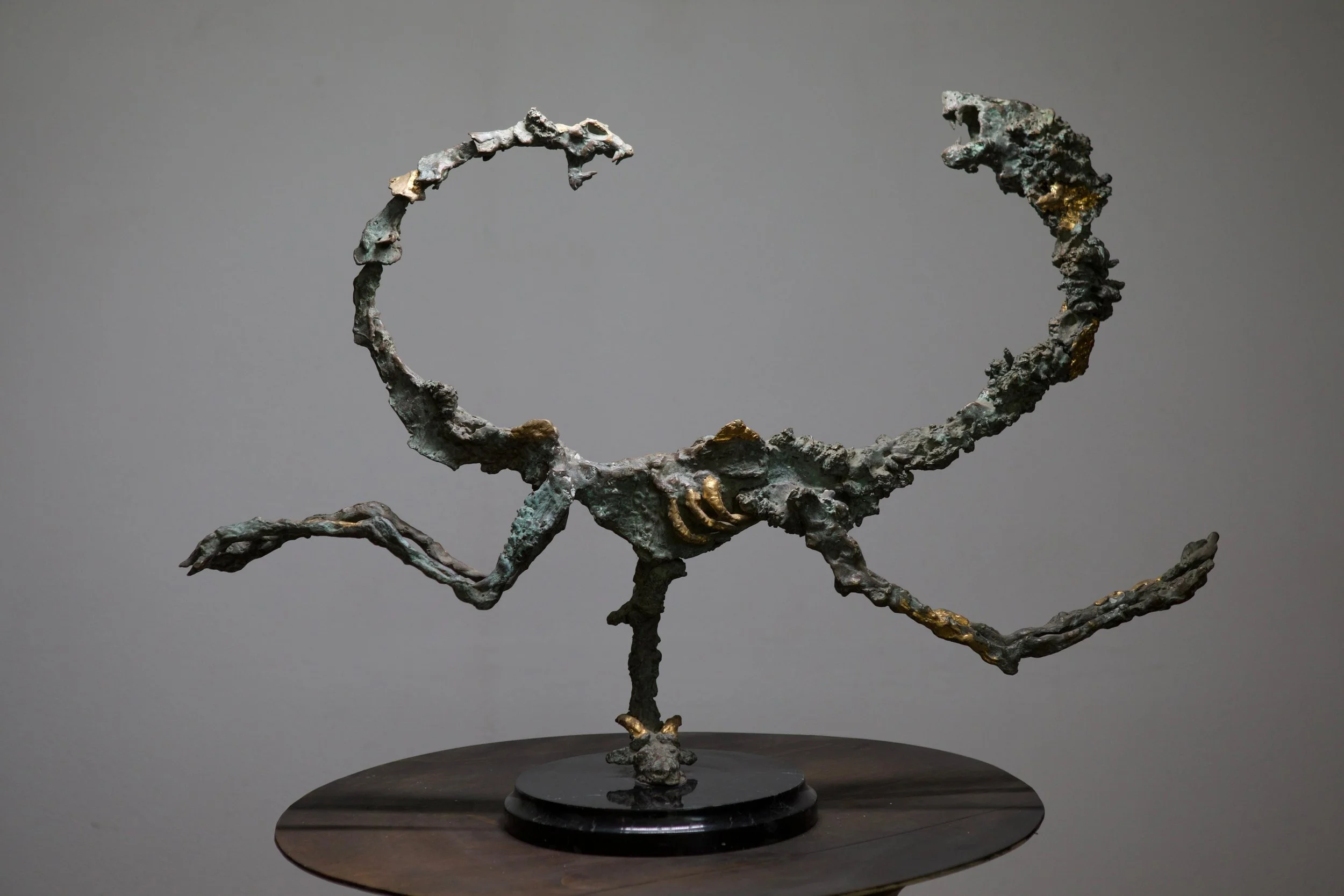
“I don’t want my sculptures to be ‘beautiful,’” Ettore says, his tone deliberate. “Beauty isn’t the goal. When someone tells me a piece is interesting, not beautiful—that’s when I feel understood.” His work, he explains, is meant to feel like an archaeological find: unearthed, weathered, incomplete. “It may be new, but I want people to wonder, How old is this?”
A Legacy Born in Clay
Though largely self-directed in his development, Ettore also studied under respected Neapolitan sculptors such as Nino Longobardi and Peppe Capasso during his time at the academy. These mentors helped refine his foundational skills and exposed him to diverse sculptural approaches.
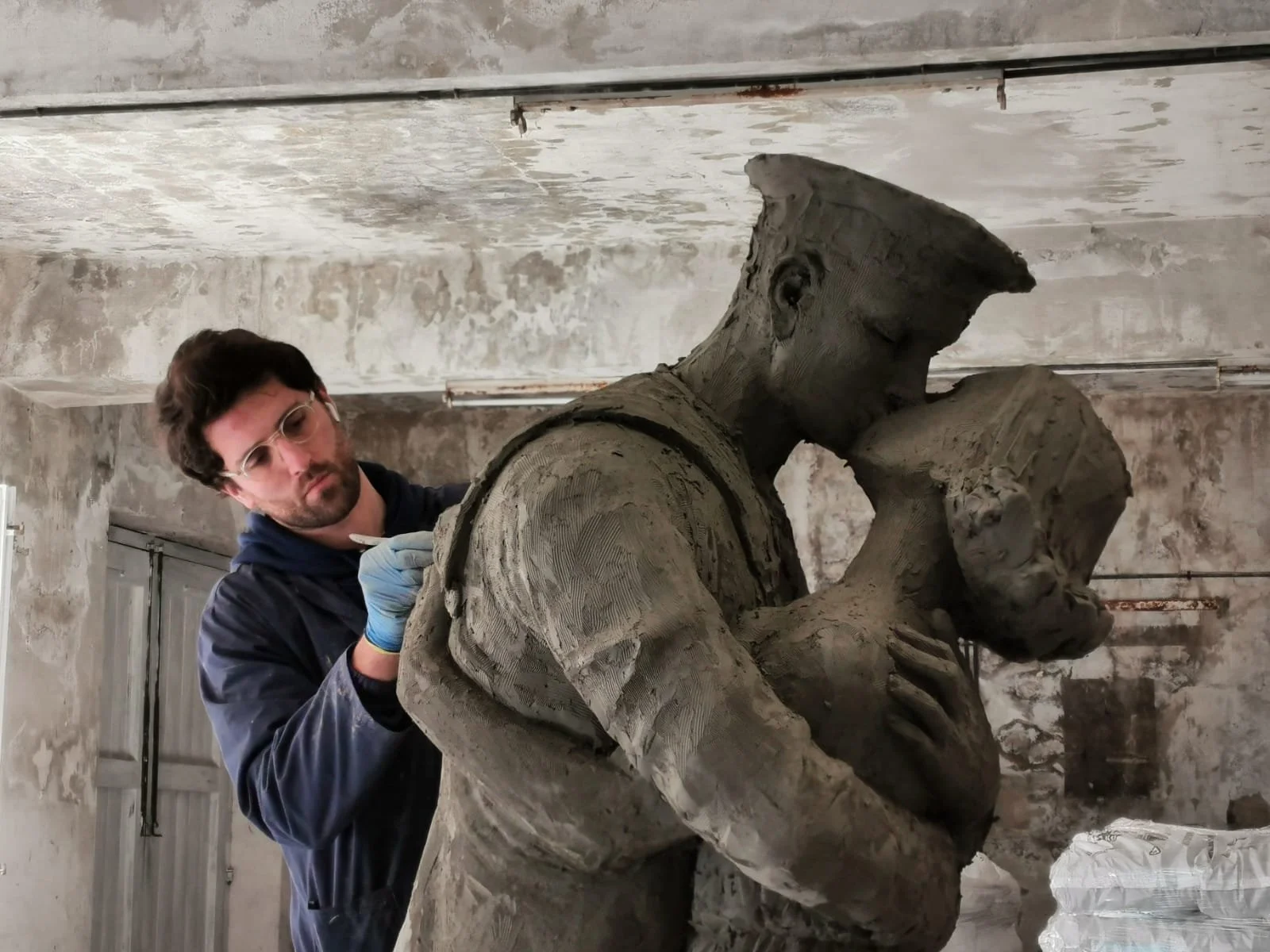
Ettore’s earliest memories are steeped in clay and fire. “Since I was little, I was always at the foundry, playing with clay,” he recalls. His parents recognized the impulse early and encouraged it. Formal training followed at the Accademia di Belle Arti in Naples, where he explored a range of visual mediums—from painting to photography—but sculpture remained central.
A pivotal moment came during a study abroad year in Paris, through the Erasmus program. “Before Paris, I saw art as rigid, academic, figurative. But there I opened my mind.” Ettore began engaging with contemporary forms and artists, drawing deep influence from modernist greats like Alberto Giacometti. “Giacometti changed everything for me,” he says. “His sculptures—elongated, eroded, ghostlike—spoke to something ancient and enduring. That spirit lives in my work.”
His artistic voice was also shaped by exposure to sculptures recovered from the sea—works with half their surface preserved and the other eroded by salt and time. The experience left a lasting impression. “That contrast—perfection beside decay—it’s exactly what I want to capture.”
Sculpting the Sacred
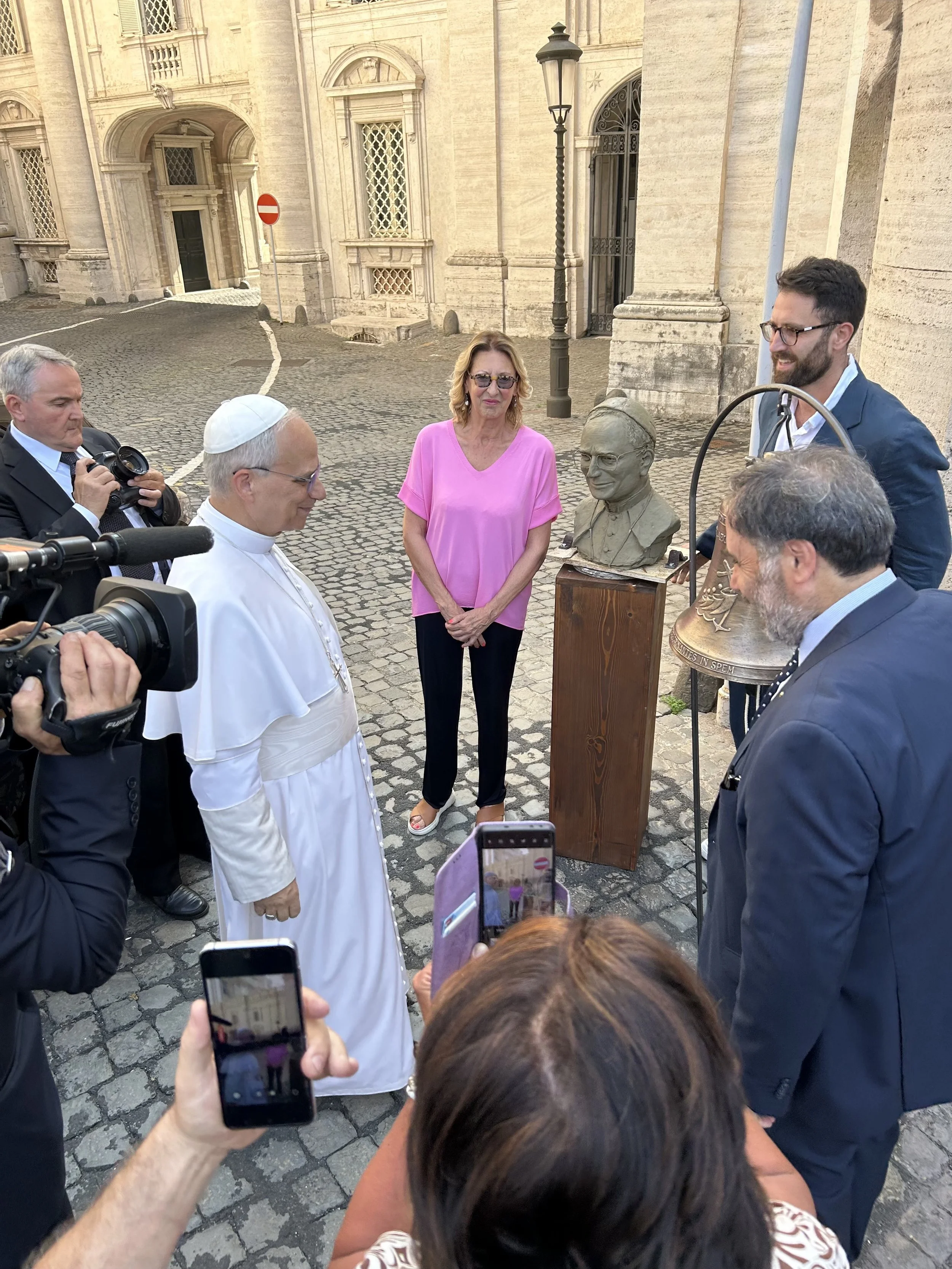
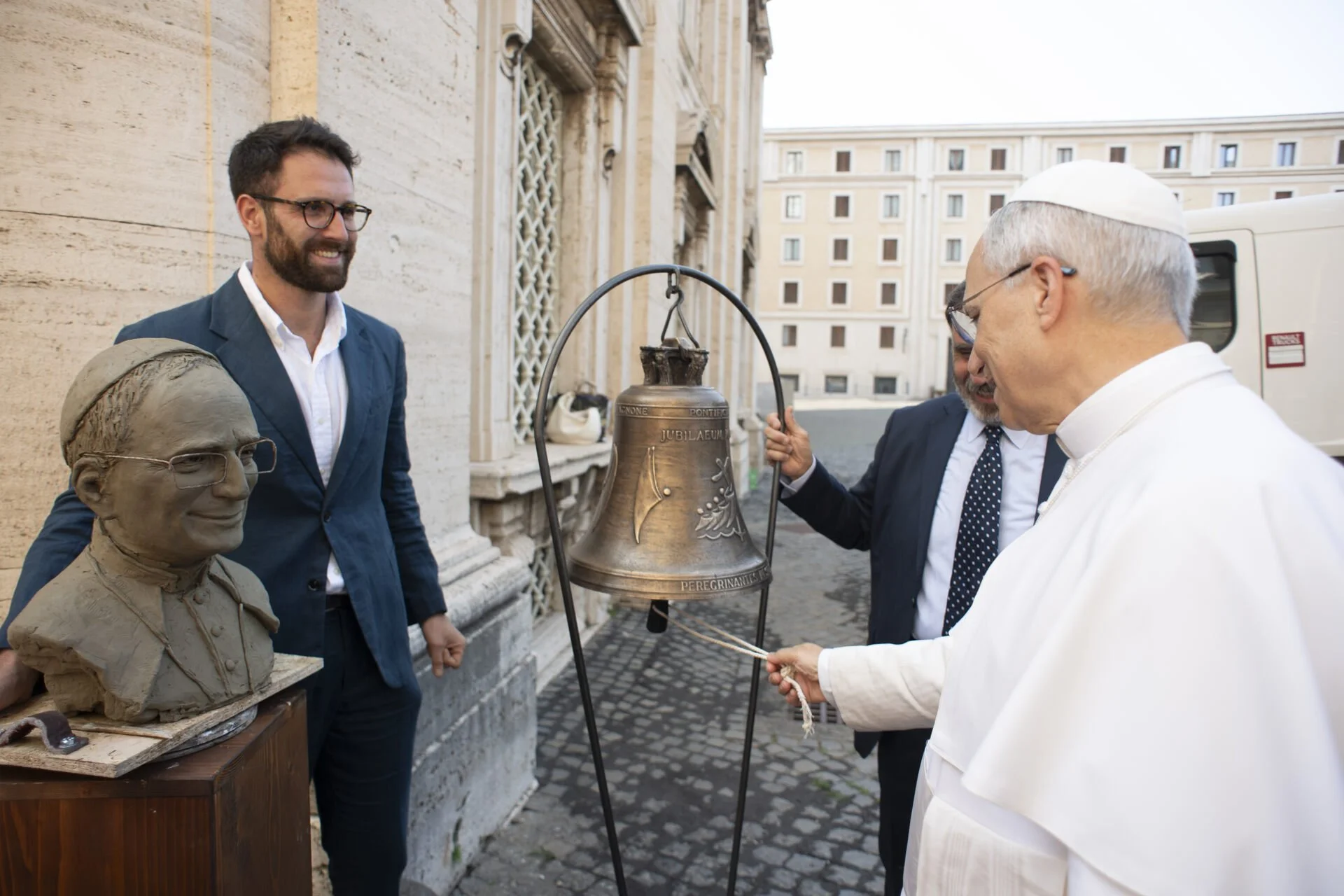
Although his practice has diverged from bell-making, Ettore often collaborates with the family foundry, especially on high-profile commissions—like a monumental bell for the 2025 World Expo in Osaka. In addition to the main bell, he was tasked with creating miniature replicas—an intricate, time-consuming process that demands precision in casting. “With small bells, the fusion isn’t always perfect,” he explains. “Bronze doesn’t flow the same way in tight molds.”
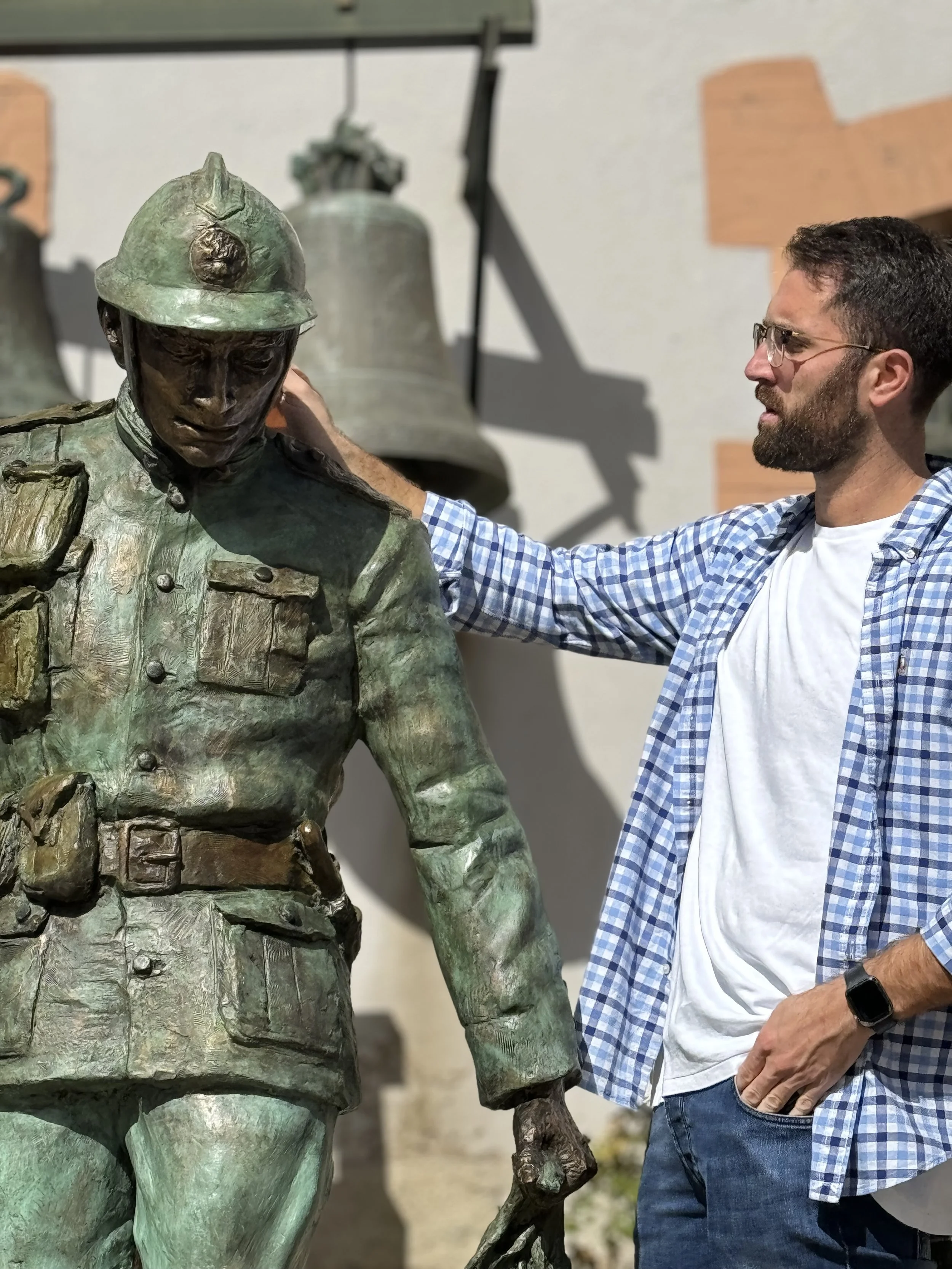
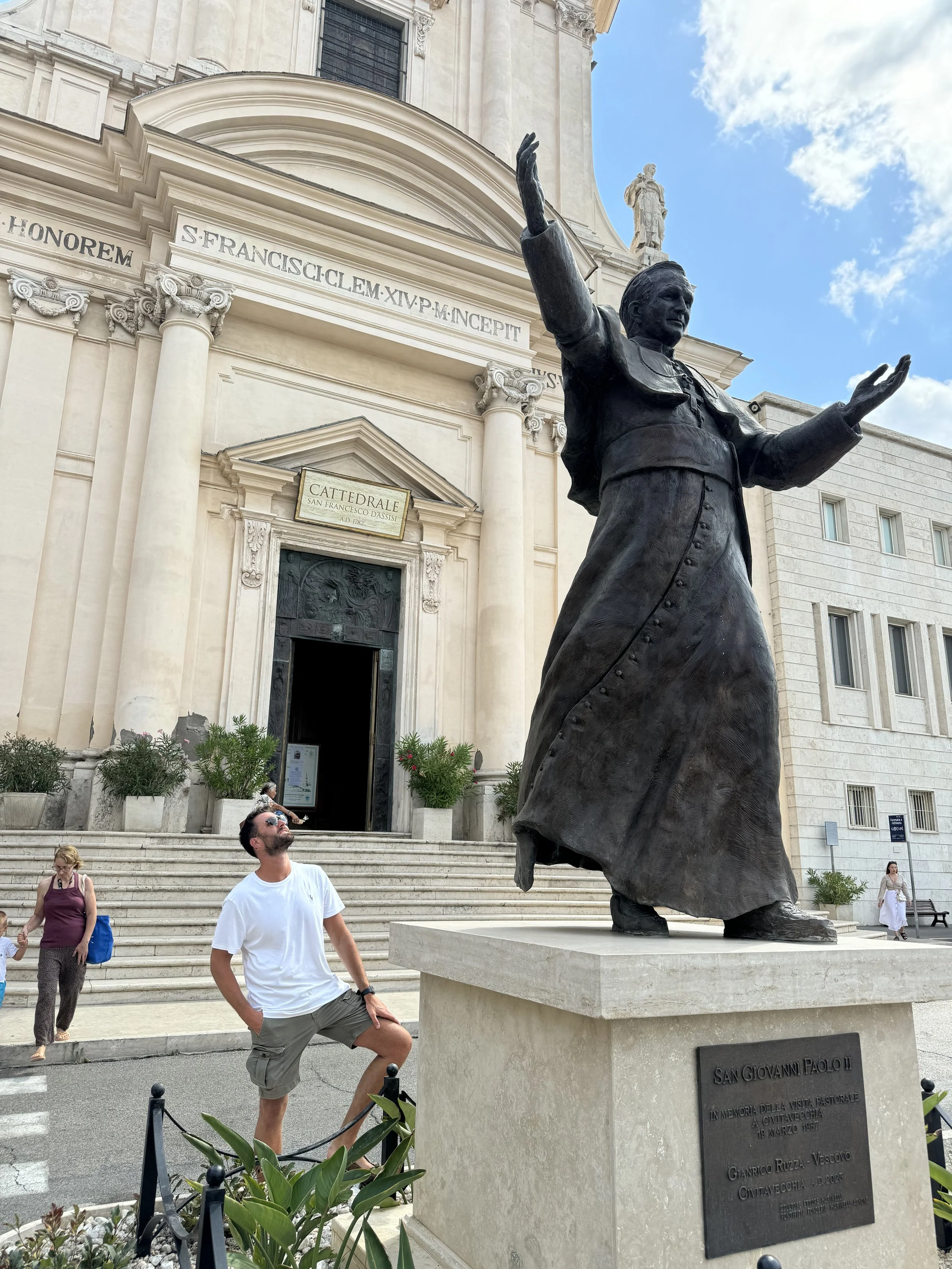
More often, however, his hands are at work shaping clay into deeply human forms for public installations, religious commissions, and private memorials. His sculptures span continents and centuries in subject matter: busts of historical figures, tributes to classical composers, saints, and, more recently, stylized tributes to artisans and laborers in rural Italian towns.
For the city of Castel del Giudice, Ettore created a series of sculptures representing traditional local trades. Their style is uniquely modern: “low poly” forms with sharp-edged, geometric bodies topped with traditional, figurative heads. “Time doesn’t allow for six-month sculptures in clay anymore,” he says. “So I sketch by hand, then model in 3D. It’s fast, but still grounded in touch.”
Capturing the Unseen
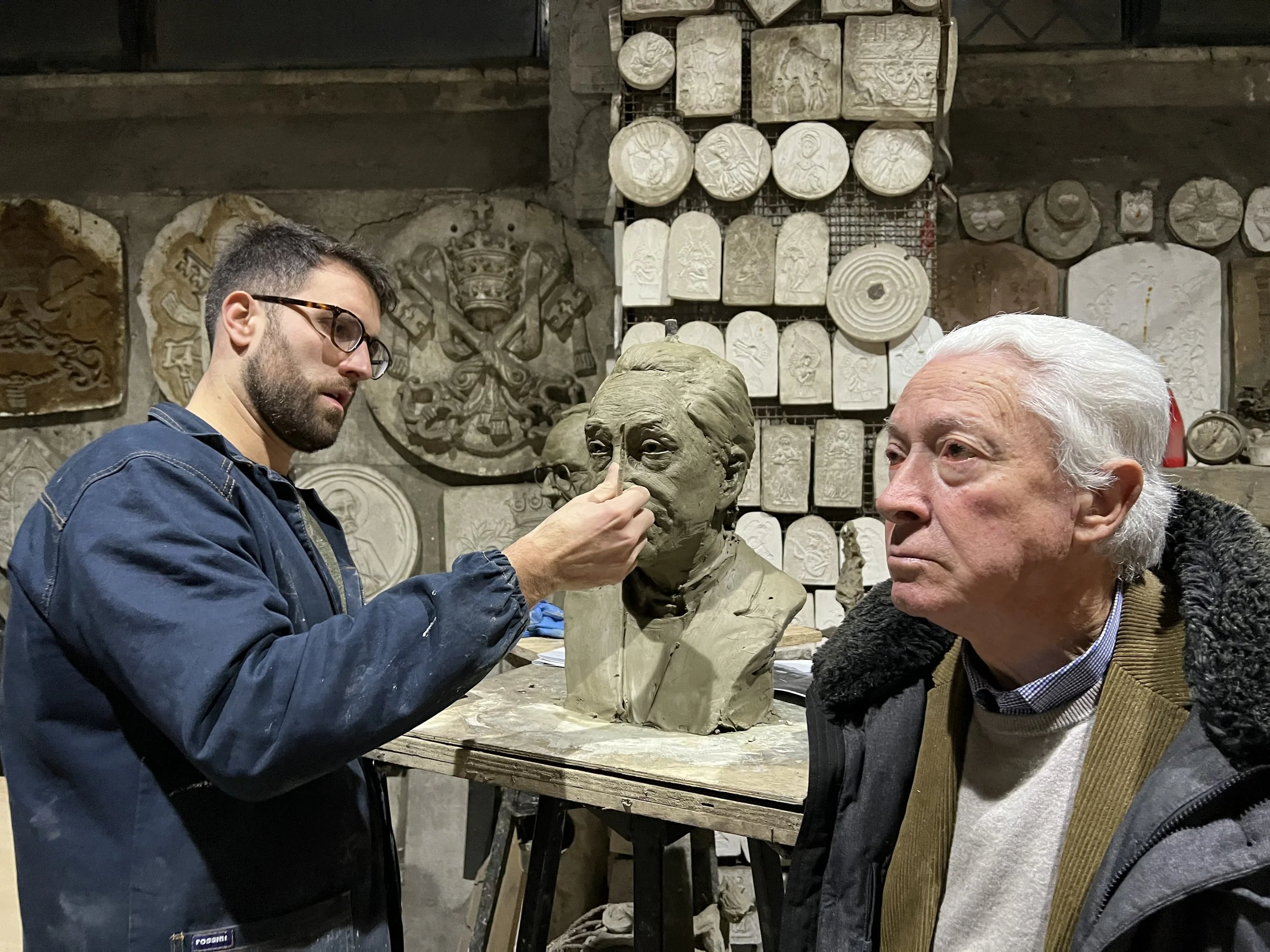
After years of practice, Ettore says that often the hands take over. “If you do sculpture for 20 years, the body remembers,” he says. “It’s physical. My hands know even when I’m not thinking.”
Before clay is shaped, Ettore always begins with the internal structure. “Sculpture starts from the skeleton,” he says. “If the armature isn’t right, everything else suffers. It has to be strong, even if no one ever sees it.”
Ettore avoids perfection deliberately. “When you make a sculpture perfect,” he says, “it dies. A sculpture that’s unfinished in some way—those live longer.”
He also admits a fondness for early stages of creation. “I like my sculpture at the beginning,” he says. “Before it’s finished. If I could, I’d cast it then. There’s a kind of life in the incompleteness—but clients expect polish.”
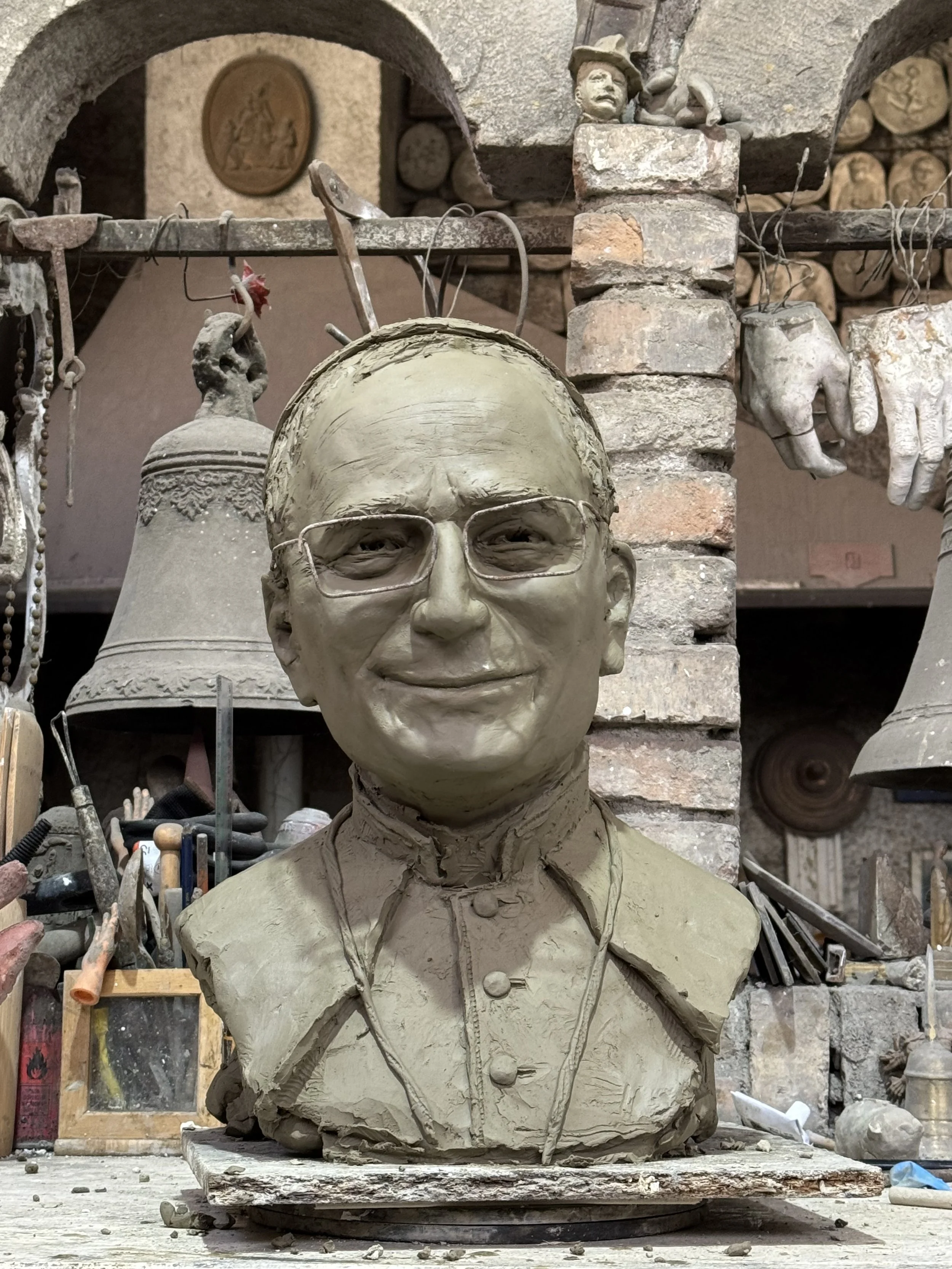
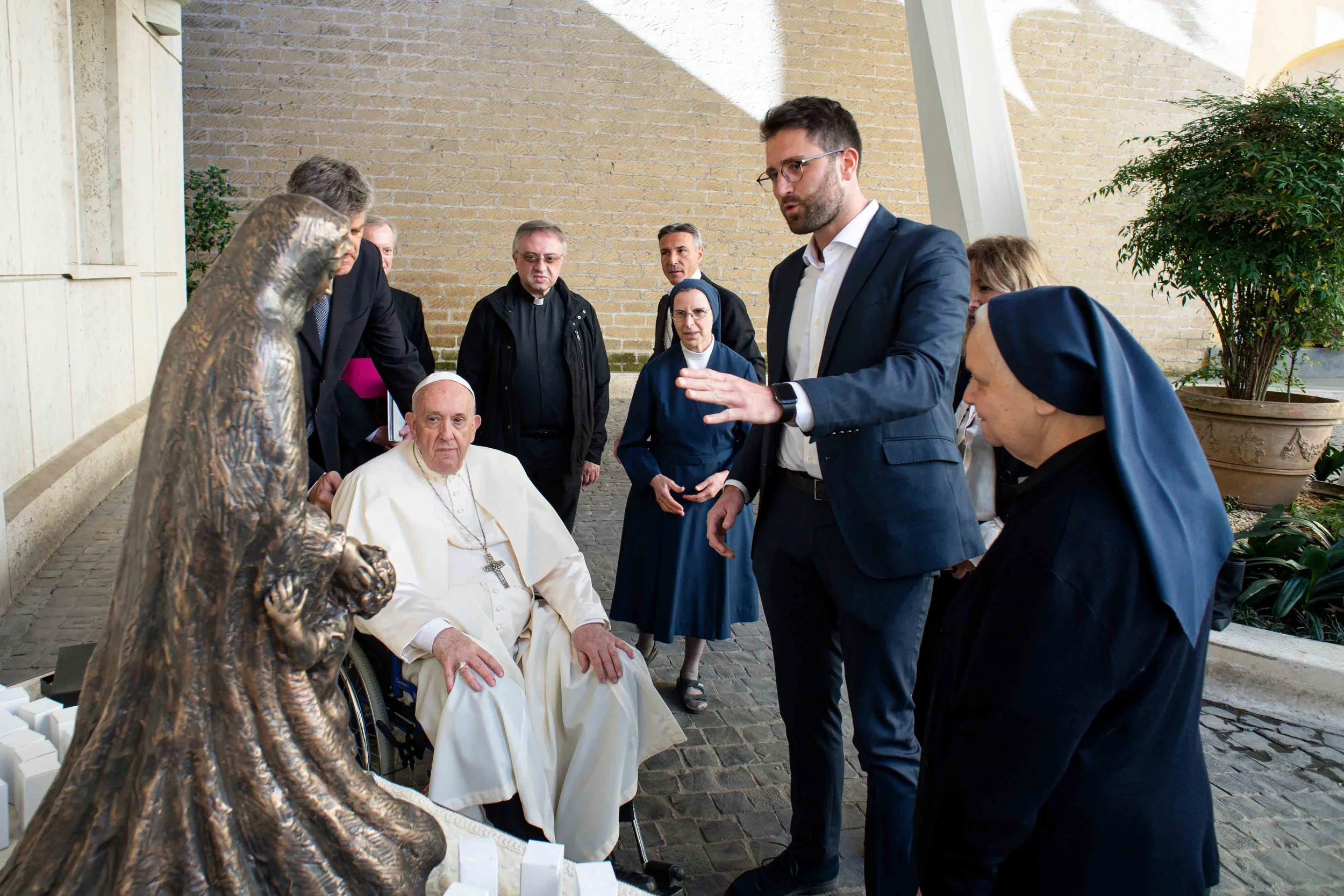
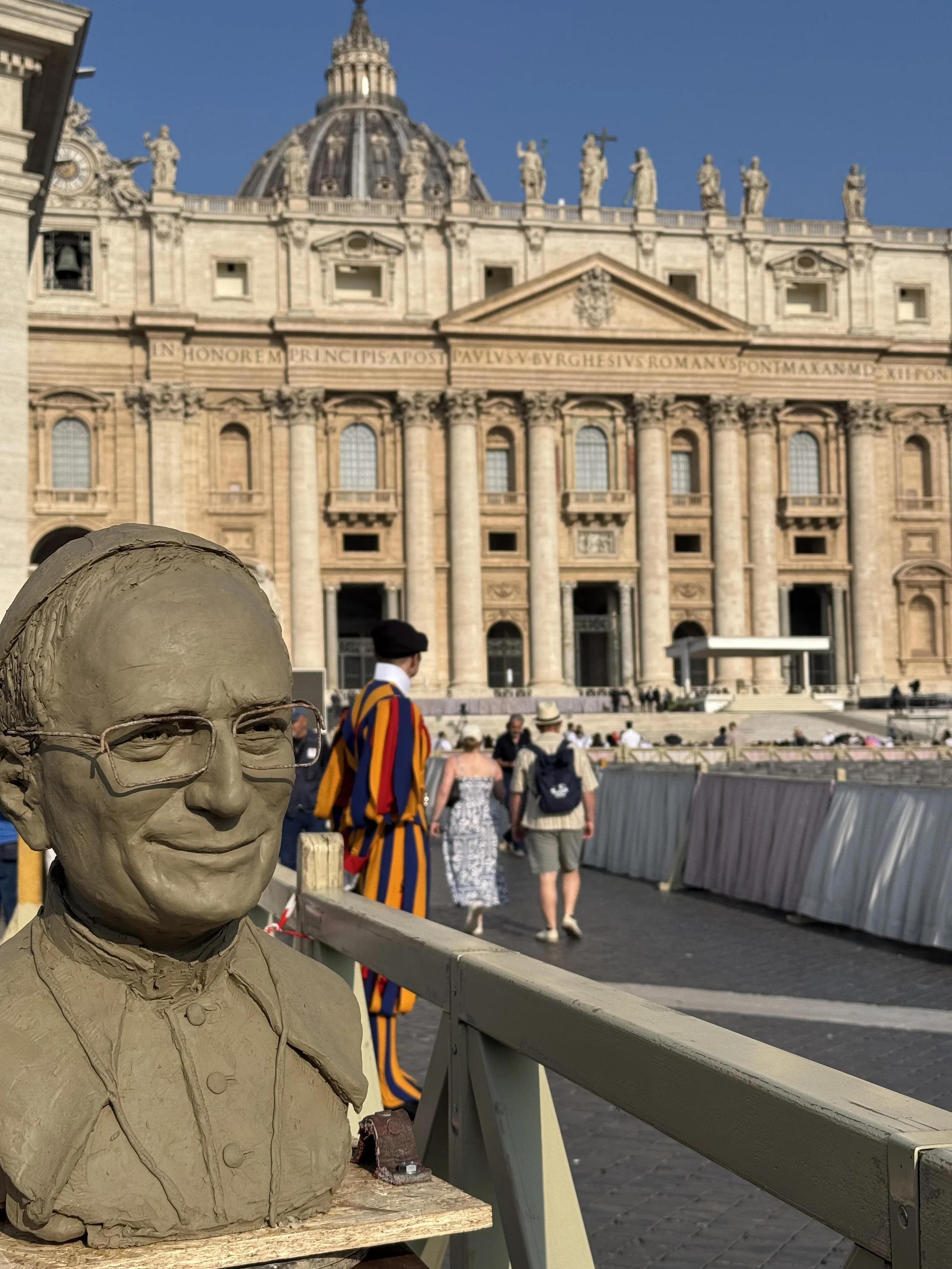
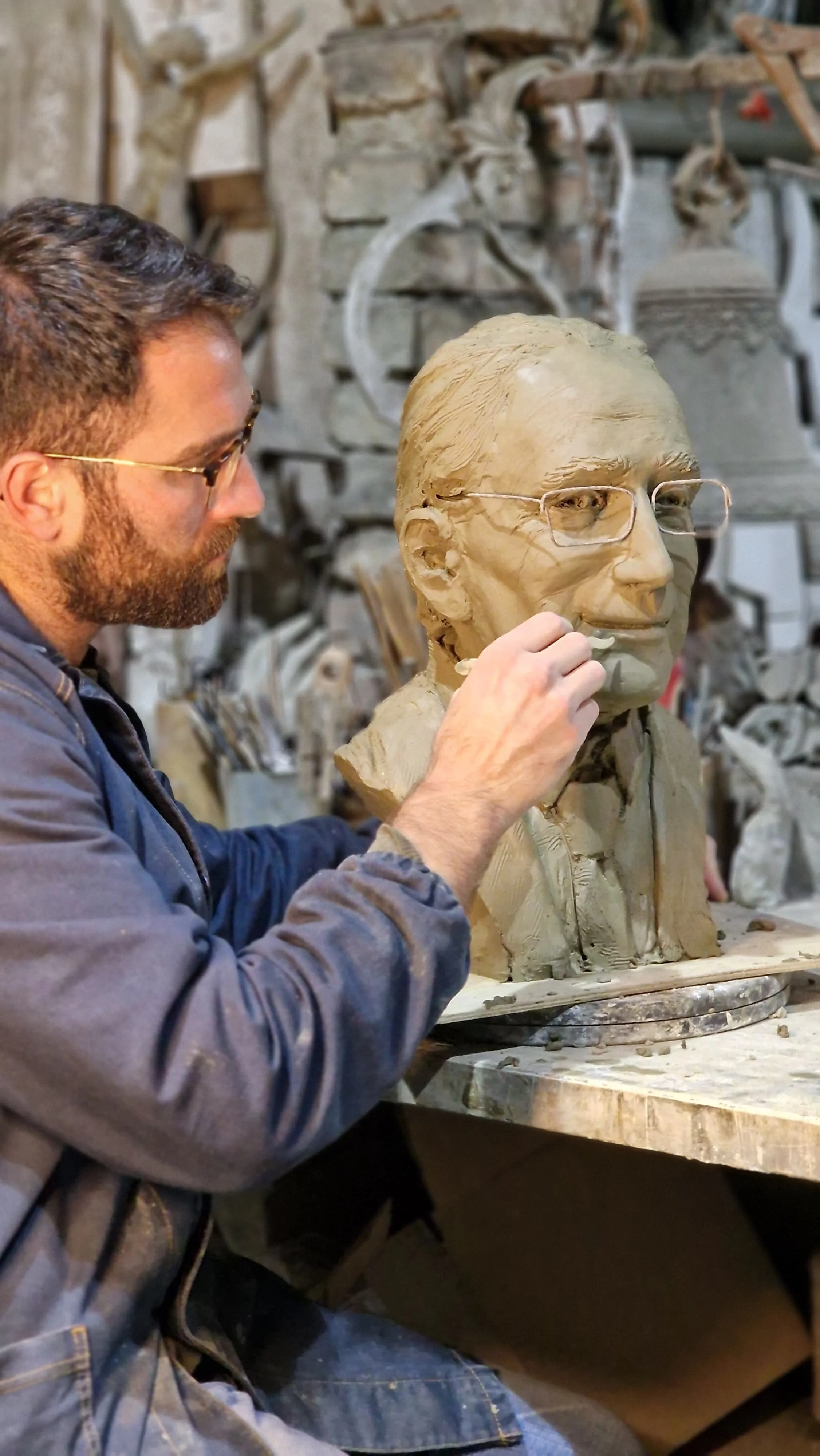
Among Ettore’s most emotionally resonant commissions was a bust of Pope Francis—sculpted entirely from photographs. “It’s not easy,” he says. “But I’ve trained my eyes to see dimension, even from a single image. The challenge isn’t just anatomical—it’s spiritual. The soul has to come through the eyes.”
This commitment to authenticity is also evident in his view of imperfection. “Real faces aren’t symmetrical,” he says. “One eye is always slightly different. But it’s in those flaws that the personality lives.”
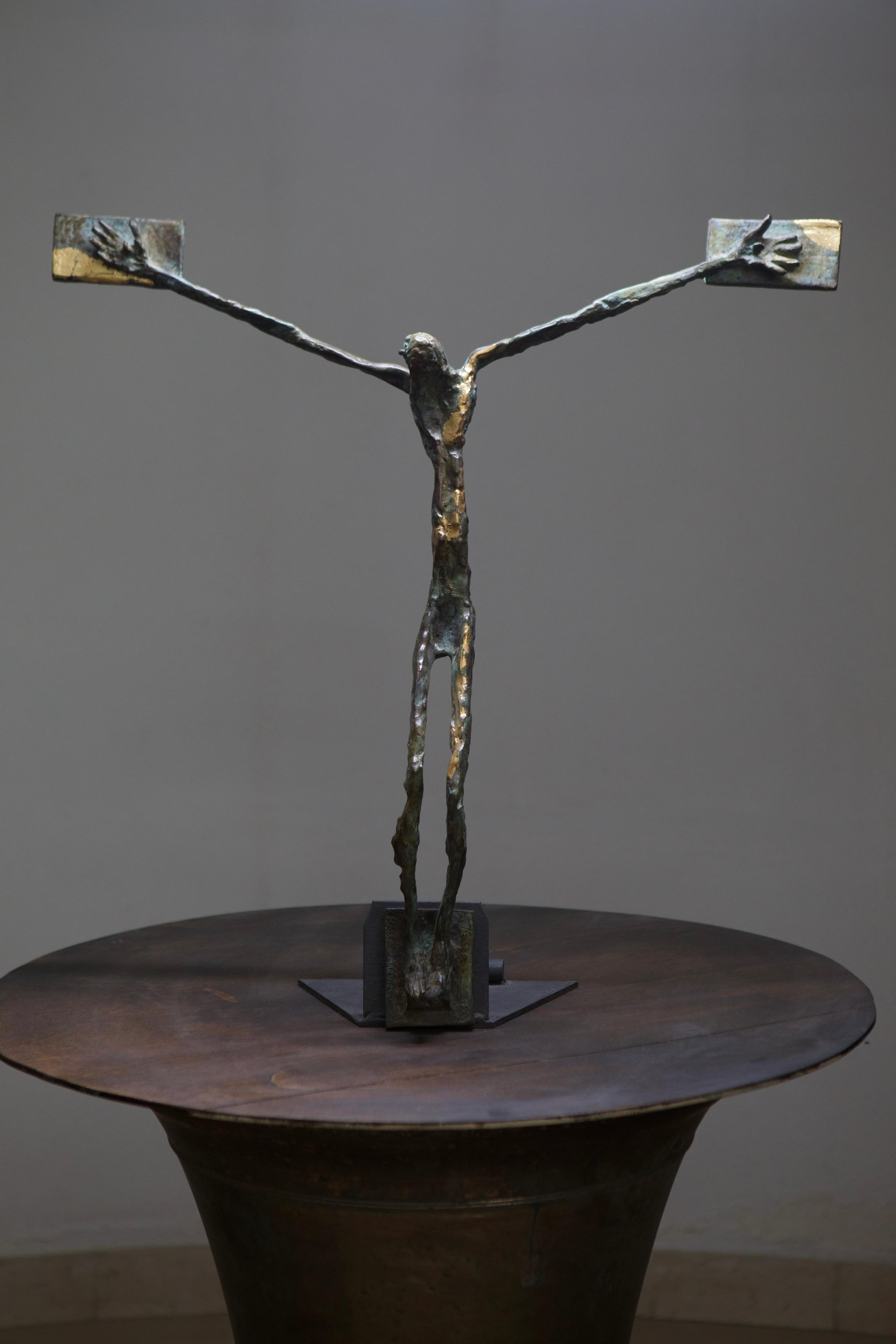
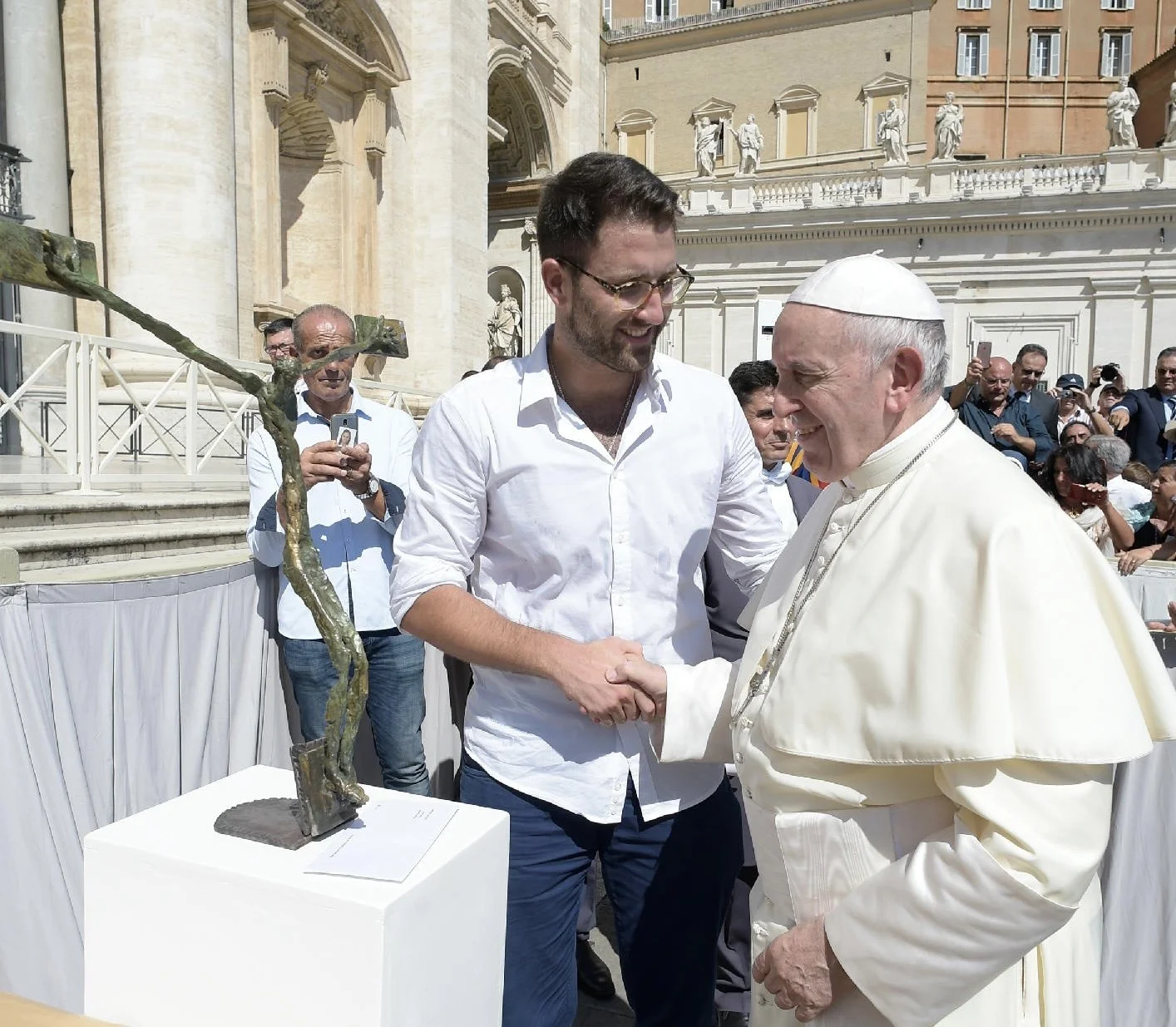
Perhaps his most meaningful sculpture was one that was never commissioned. Ettore created a gaunt, stylized Christ—long limbs, fractured surface—using his own visual language. He presented it in St. Peter’s Square years ago, alongside a gilded bust of San Gennaro. When Pope Francis passed by, he stopped. “Who made this?” he asked. A moment later, Ettore was summoned forward. The Pope took his hand and inquired about acquiring the sculpture. “It wasn’t commissioned,” Ettore says. “It came straight from me. And the Pope saw something in it.”
The Artist as Channel
Not all of Ettore’s works originate from imagination alone. In one extraordinary case, a local man who claimed to have seen the Madonna and Christ in apparitions near Agnone commissioned Ettore to sculpt his visions. “I was just the hands,” Ettore says. “He described every detail. I simply brought it into being.”
The balance between artistic authorship and sacred responsibility is one Ettore lives daily. “Most of my work is commissioned,” he says, “but I try to leave space for my own voice.”
That voice emerges most clearly in what he calls his “archaeological style”—a haunting aesthetic where new sculptures feel weathered, aged by time. “It’s like stopping erosion mid-process,” he says. “The piece is new, but the wear is embedded. The memory already etched.”
Beyond the Foundry Walls
Sculpture is not only a cerebral process—it is physically demanding. “It’s not just the mind,” Ettore says. “It’s kilos of clay. I go home destroyed.”
While sculpture dominates his life, Ettore finds balance in simple rituals. “After a long day sculpting, I go to the market, buy something fresh, and cook for friends,” he says. “We eat together often. It’s one of the joys of small-town life.”
He also teaches—sculpting and modeling at a local arts school. “Teaching opens the mind. It reminds me that art isn’t just practice; it’s dialogue.”
Travel plays a vital role in that dialogue. “I loved Brazil,” he says. “There’s something in the people, in the rhythm of life. The museums in São Paulo were incredible—innovative, alive.” He collects impressions everywhere he goes. “I don’t copy what I see. But my head gathers things. Later, they come out in the clay.”
Inheriting and Choosing Legacy
The Marinelli name carries weight—over a thousand years of continuous artisanal history. Ettore doesn’t take that lightly, but he speaks honestly about how demanding it is. “I don’t recommend this life,” he says with a laugh. “It’s hard. It’s beautiful, yes—but consuming.”
His younger brother Pietro, an engineer, returned to the foundry despite Ettore’s advice to explore other paths first. “He came back anyway,” Ettore laughs. “Now he says maybe I was right.”
Still, he respects the journey. “Each person has to find their role in the foundry. I was lucky to find mine in sculpture. Others have to discover theirs.”
The Quiet Resonance
Somewhere in each piece, often hidden, Ettore leaves his nickname: Big. “It’s from when I was little,” he says. “It’s always there—just not where you’d expect.”
What does Ettore want people to feel when they encounter his work?
For him, the goal is not admiration for technique or aesthetic beauty. What matters more is emotional and historical depth. He wants viewers to feel as though they’ve unearthed something ancient, half-eroded by time, yet powerfully intact. “I want the sculpture to whisper,” he says. “Not shout.”
In a world often obsessed with speed and spectacle, Ettore Marinelli offers a slower form of resonance—one that doesn’t demand attention but earns it, silently, with form and feeling.
His sculptures do not ring like the Marinelli bells. But they echo just as deeply.
-
![]()
Dream it.
-
![]()
Build it.
-
![]()
Grow it.
-
![]()
Sell it.
-
![]()
New List Item
-
![]()
New List Item
-
![]()
New List Item
-
![]()
New List Item
-
![]()
New List Item
-
![]()
New List Item
-
![]()
New List Item
-
![]()
New List Item
-
![]()
New List Item
-
![]()
New List Item
-
![]()
New List Item